If you sit on an HOA or condo board in Warren County, the parking areas and drive lanes are one of the largest shared assets you manage. Sealcoating protects that asset for a fraction of what repaving costs. Here is how a board should budget, time, and schedule the work.
What does HOA parking lot sealcoating actually include?
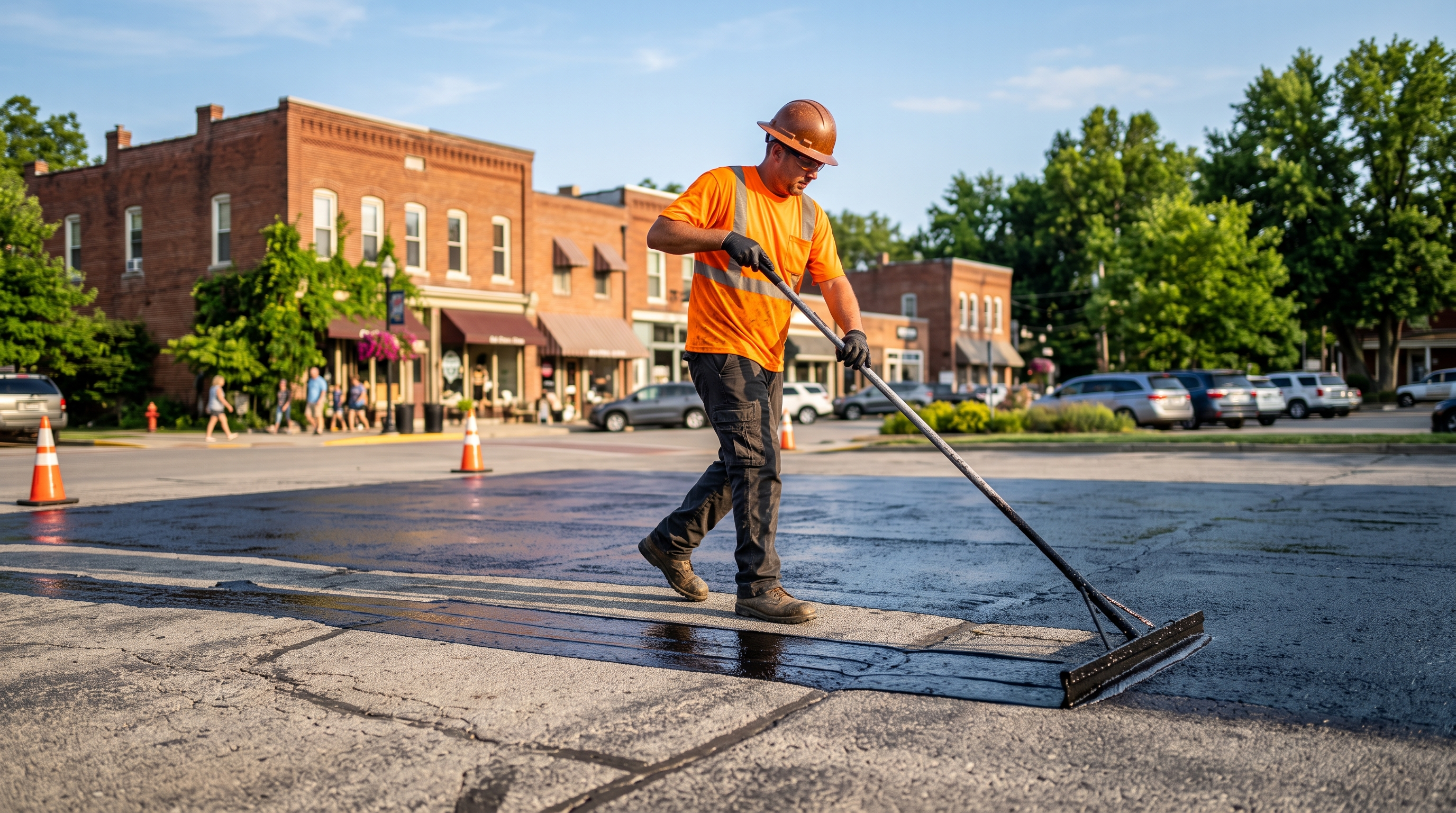
HOA parking lot sealcoating is a maintenance service that cleans the asphalt, fills cracks, and applies a protective coal-tar or asphalt-emulsion sealer across the community's lots and drive lanes. A complete job for a community usually covers four steps: sweeping and blowing debris off the surface, filling cracks wider than a quarter-inch with hot rubberized crack filler, applying two coats of sealer, and re-striping parking stalls, fire lanes, and accessibility markings once the sealer cures.
For an HOA, the striping step matters as much as the seal. Faded fire lanes and handicap stalls are a code and liability issue, so most communities pair sealcoating with a fresh line-striping pass in the same visit.
How much does it cost to sealcoat an HOA parking lot in Ohio?
Sealcoating an HOA lot in Ohio typically runs $0.10 to $0.25 per square foot for the seal itself, with crack filling and striping priced separately. A 20,000-square-foot community lot lands roughly in the $2,000 to $5,000 range for a full seal, and larger communities with multiple lots and long drive lanes scale from there.
Three factors move the number: total square footage, how much crack filling and patching the asphalt needs first, and how many parking stalls and markings get re-striped. Getting a walk-through quote that itemizes seal, crack filling, and striping lets the board see exactly where the money goes rather than one lump figure.
How often should an HOA sealcoat its parking lots?
Most Ohio community lots should be sealcoated every two to three years. Drive lanes and entrance aprons wear faster than back rows because they carry constant turning and braking traffic, so some boards seal high-traffic zones on a two-year cycle and lower-traffic parking rows on a three-year cycle.
Ohio's freeze-thaw winters are the reason the cycle is this short. Water seeps into small surface cracks, freezes, expands, and widens them. Sealcoating keeps water out of the asphalt binder, which is what protects the pavement base from the damage that eventually forces a full repave.
Why does sealcoating protect an HOA's reserve fund?
Sealcoating protects the reserve fund by pushing the repave date years further out. Repaving a community lot costs several dollars per square foot, often ten to twenty times the cost of a seal. A board that seals on schedule spreads a small, predictable expense across the years instead of facing a large capital assessment when neglected asphalt fails all at once.
Deferred sealcoating is how a lot goes from cosmetic graying to structural cracking and potholes. Once water reaches the base and the asphalt starts breaking apart, sealcoating no longer helps and the only fix is patching or repaving. Staying on a cycle is the cheapest way to hit reserve-study targets for pavement.
When is the best time to schedule community sealcoating?
The best window to sealcoat an Ohio community lot is May through early October, when daytime temperatures stay above 50F and overnight lows do not drop near freezing. Sealer needs warm, dry pavement to cure into a hard, even coat. Late summer is a practical sweet spot for HOAs because the coat has time to fully cure before the first winter freeze.
Booking early in the season matters more for communities than for single driveways. Reputable contractors fill their commercial calendars first, and a whole-community job needs a scheduled block, not a same-week slot. Boards that want August or September work should be getting quotes in the spring.
How do you sealcoat a community lot without blocking residents?
You sealcoat a community lot in sections and stagger the schedule so residents always have a place to park. A contractor working an HOA closes and seals one lot or one bank of rows at a time, leaving the rest open, then rotates as each section cures. Foot traffic can usually return in 24 to 48 hours and vehicles in 48 to 72 hours, so a phased plan keeps every unit reachable.
Communication is the other half. Posting notices a week ahead, marking closed sections with cones and signs, and giving residents a clear “off the lot by” time prevents the cars-stuck-on-wet-sealer problem that generates complaints. A good contractor helps the board plan the phasing and the resident notice before the crew arrives.
What should an HOA board plan for this year?
Start by getting an itemized walk-through quote that separates crack filling, sealcoating, and striping so the board can budget each line and phase the work if needed. Confirm the contractor carries commercial liability insurance, has done community-scale lots before, and will coordinate section-by-section scheduling around residents.
Michelson's Sealcoating handles commercial and HOA lots across Lebanon, Mason, Springboro, Middletown, and the rest of Warren County, including crack filling, two-coat sealcoating, and line striping for fire lanes and accessible stalls. If your board is planning pavement maintenance for this season, reach out for a walk-through and an itemized quote for your community.