If your asphalt has turned gray, sprouted cracks, or started shedding loose stone, your parking lot is telling you it needs sealcoating. Most Warren County, Ohio property owners miss the warning signs until the damage is expensive to fix. Catching the problem early, while it is still a surface issue, is the difference between a few hundred dollars of sealcoating and a full asphalt replacement. Below are the ten clearest signs to watch for, why they matter, and what to do before another freeze-thaw winter rolls through.
How do I know if my parking lot needs sealcoating?
You know your parking lot needs sealcoating when its surface starts to fade, crack, or break apart. Fresh asphalt is rich black and water-tight; aged asphalt turns gray, brittle, and porous as the sun and rain strip away the protective binder that holds the stone together. Once that binder is gone, water gets in, freezes, expands, and tears the pavement apart from the inside out. Sealcoating restores that protective layer and locks out the moisture that causes the worst damage. If you see any of the signs below, your lot is past due for a fresh coat.
What are the 10 signs your parking lot needs sealcoating?
The ten signs below are the most reliable indicators that your asphalt has lost its protective seal and needs a fresh coat. The more of them you can check off, the more urgent the job.
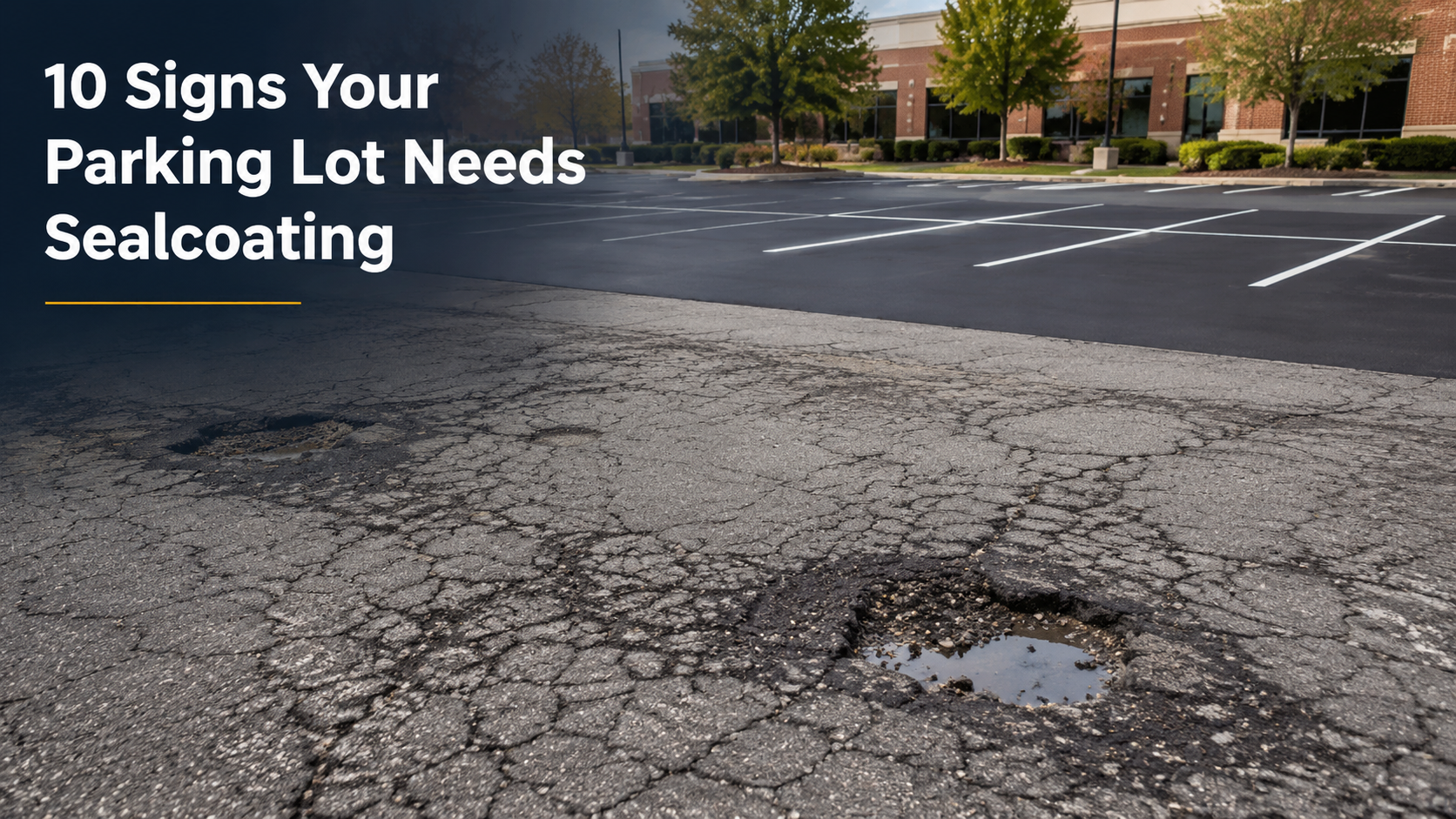
- The color has faded from black to gray. This is the earliest and most common sign. Black asphalt means the binder is intact; gray means the sun has oxidized it away and the surface is now exposed and drying out.
- You see hairline or spider-web cracks. Small surface cracks, often called alligator or spider cracking, mean the pavement has lost flexibility and is starting to fail. Sealing now stops water from widening them.
- Cracks are getting wider or branching. When a thin crack grows into a finger-width gap or starts spreading into a web, water is already getting underneath the surface.
- Potholes are starting to form. Potholes begin as a cracked, sunken spot that breaks open after water freezes beneath it. Even one small pothole signals that water has reached the base layer.
- Loose stone or raveling. If you see loose gravel collecting at the edges or in the gutters, your asphalt is raveling, meaning the binder can no longer hold the aggregate together.
- Standing water or birdbaths after rain. Puddles that linger long after a storm point to low spots and a surface that can no longer shed water, accelerating deterioration in those areas.
- The surface feels rough, dry, or brittle. Run your hand across it. A smooth, slightly flexible surface is healthy. A dry, gritty, sandpaper texture means the asphalt is drying out and cracking is close behind.
- Faded or worn parking line striping. Worn striping usually appears alongside a worn surface. If your lines are barely visible, the seal coat that protects the pavement underneath is almost certainly gone too.
- Oil and chemical stains soaking in. On sealed asphalt, oil beads and wipes away. When stains soak in and darken the pavement, the surface is porous and unprotected, and those chemicals are actively breaking down the binder.
- It has been more than two or three years since the last coat. Even if the lot looks acceptable, sealcoating wears out on a schedule. In Ohio’s climate, most commercial lots need a fresh coat every two to three years to stay ahead of damage.
What are the warning signs of serious asphalt damage?
The warning signs of serious damage are the ones that reach the base layer underneath. Hairline cracks and fading are surface problems sealcoating fixes directly, but wide cracks, multiple potholes, large areas of alligator cracking, and sunken sections mean water has already reached the gravel base. At that point, those spots need crack filling, patching, or partial resurfacing first, followed by a protective seal coat over the whole lot. The earlier you act, the more of the original pavement you save, and waiting turns a maintenance job into a reconstruction job.
Why does catching these signs early save money?
Catching the signs early saves money because sealcoating costs a fraction of what repaving does. A commercial parking lot can last twenty to thirty years when it is sealed on schedule, but neglected asphalt often needs full replacement in half that time. Sealing a typical Warren County lot is a small recurring expense every few years; repaving that same lot is a major single project, plus lost business while it is closed. Every dollar spent on timely sealcoating defers or eliminates a much larger replacement bill, and the protective coat seals out the water, oil, and UV rays that cause the cracking in the first place, so you are preventing the next round of damage, not just covering the last one.
How often should a parking lot be sealcoated in Ohio?
A parking lot in Ohio should be sealcoated every two to three years. Our freeze-thaw climate is especially hard on asphalt: water seeps into tiny cracks, freezes and expands overnight, then thaws and contracts the next day. That constant cycle pries the pavement apart faster than it would in a milder region, which is why Warren County lots need more frequent attention than lots in the South.
High-traffic lots, lots that take heavy delivery trucks, and lots with a lot of oil exposure may need sealing closer to every two years. Lighter-use lots can sometimes stretch to three. New asphalt should get its first seal coat about six to twelve months after it is laid, once it has fully cured. If you cannot remember the last time your lot was sealed, that by itself is a sign it is overdue.
What happens if you do not sealcoat your parking lot?
If you do not sealcoat your parking lot, the asphalt deteriorates faster and the repairs get more expensive every year. Without that protective layer, UV rays keep drying out the surface, water keeps seeping into cracks, and the freeze-thaw cycle keeps widening them: surface cracks become deep cracks, deep cracks become potholes, and potholes spread into large failed sections.
Beyond the pavement itself, a worn lot is a liability. Cracks and potholes are trip hazards for customers and can damage vehicles, and a faded, crumbling lot signals neglect to everyone who pulls in. For a business, the parking lot is the first impression, and sealcoating protects both the asphalt and the impression it makes.
What is the best time of year to sealcoat in Warren County?
The best time to sealcoat in Warren County is late spring through early fall, when temperatures stay reliably above 50 degrees and the pavement has time to cure before winter. Sealcoat needs warm, dry conditions to bond and harden properly, so the window in Ohio generally runs from May into October.
Fall is a particularly smart time to seal, because a fresh coat going into winter shields your asphalt from the worst of the freeze-thaw damage during the months that cause the most harm. Sealing in spring repairs winter damage and protects against the summer sun. Either way, the goal is to get a protective coat down before another Ohio winter has a chance to work on your unprotected pavement.
How much does parking lot sealcoating cost?
Parking lot sealcoating in Ohio typically runs from about $0.10 to $0.25 per square foot, depending on the size of the lot, its condition, and how much crack filling or patching it needs first. Larger lots cost more in total but usually less per square foot, and lots that need real crack repair or pothole patching before sealing will run higher than one simply due for routine maintenance. The most accurate way to know your number is a free on-site quote, because it depends on your specific square footage and pavement condition. The takeaway is simple: sealcoating is an inexpensive, recurring expense, while repaving a neglected lot is a major capital project.
Get a free sealcoating quote for your Warren County lot
If your parking lot is showing any of these ten signs, the smartest next step is a quick inspection before the next freeze-thaw season makes the damage worse. At Michelson Sealcoating, we work with property owners and businesses across Warren County, Ohio to keep asphalt protected, safe, and looking its best. We will walk your lot, point out exactly what we see, and give you a clear, no-pressure quote for sealcoating and any crack filling your pavement needs. Reach out today for a free sealcoating quote and protect your investment before small signs turn into big repairs.